

Mulch Like a Pro: Landscaping Tips Every Homeowner Should Know
Few things make a landscape look fresh and polished faster than a newly mulched bed. Mulch adds instant curb appeal, helps your plants thrive, and can even protect the health of your trees.
But before you start hauling wheelbarrows or bags of mulch this spring or summer, there are a few important do’s and don’ts to know. At Titan Tree Care, we’ve seen beautiful landscapes thrive with proper mulching and we’ve also seen some common mistakes cause serious damage to trees and plants. Don’t worry, we are here to help!
Here are our favorite mulch bed tips to help your landscape look great and stay healthy all season long.
Why Mulch Matters
Mulch does much more than make your yard look neat and tidy. A properly mulched landscape can:
- Retain moisture during hot summer weather
- Reduce weed growth naturally
- Help regulate soil temperature
- Improve soil quality as organic mulch breaks down
- Reduce soil erosion from heavy rain
- Protect shallow roots from lawn equipment damage
For trees especially, mulch acts like a protective buffer zone, keeping string trimmers and lawnmowers away from delicate bark and root areas.
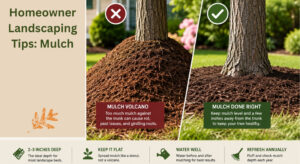
Rule #1: Avoid the “Mulch Volcano”
If there’s one mulching mistake we wish homeowners would stop making, it’s piling mulch high against tree trunks. We have mentioned this one many times before but it’s important to remind this basic rule.
You’ve probably seen it before: a mountain of mulch stacked around the base of a tree like a volcano.
While it may look tidy, this practice can actually be harmful to trees.
Too much mulch around the trunk can:
- Trap excess moisture against bark
- Encourage rot and fungal issues
- Attract insects and rodents
- Cause girdling roots that slowly strangle the tree
- Hide early signs of disease or decay
The Pro Tip:
Instead of piling mulch upward, spread it flat like a donut, not a volcano.
Leave a few inches of space around the trunk so the tree’s root flare (where the trunk widens at the base) remains visible.
A tree should never look like it’s planted in a mulch mountain.
How Much Mulch Is Too Much?
When it comes to mulch, more is not better.
The sweet spot for most landscape beds is 2–3 inches deep
Anything deeper than about 4 inches can start to suffocate roots, hold too much moisture, and compact over time.
If you mulch every year, remember that old mulch doesn’t magically disappear. Before adding more, fluff or lightly rake existing mulch to break up compaction and check depth.
A cost-savings tip is sometimes all you need is a quick refresh, not another full layer.
Choose the Right Mulch
Not all mulch is created equal.
Here are a few common options and when they work best:
Hardwood Mulch: A favorite for most landscapes. It breaks down slowly, improves soil over time, and provides a natural look.
Shredded Bark Mulch: Great for slopes because it stays in place better during heavy rain.
Dyed Mulch; Black or brown mulch can create a crisp, polished appearance, but quality matters. Low-grade dyed mulch may fade quickly or contain questionable materials.
Wood Chips: Excellent for naturalized areas and around trees, especially larger mulch rings.
Avoid Fresh Mulch Right Against Young Plants
Fresh mulch can temporarily pull nitrogen from the soil as it breaks down, so keep some breathing room around delicate annuals and small perennials.
Mulch Bed Pro Tips for a Better-Looking Landscape
Edge Your Beds First
Want your mulch to instantly look more professional?
Cut clean edges around beds before spreading mulch. Sharp borders make even budget-friendly mulch look polished and intentional.
Pull Weeds Before You Mulch
Mulch suppresses weeds but it doesn’t magically eliminate them. Putting mulch over existing weeds often creates a bigger problem later.
Water Before and After Mulching
Dry soil struggles to absorb water. Give beds a drink before mulching and lightly water afterward to help settle everything into place.
Create Larger Mulch Rings Around Trees
Tiny mulch circles around trees are mostly decorative. Larger mulch areas protect roots better, reduce mower damage, and decrease competition from grass. For mature trees, bigger is usually better.
Keep Mulch Away From House Foundations
Mulch piled against siding or foundations can invite moisture problems and unwanted pests. Leave a small buffer space around structures whenever possible.
Common Mulching Mistakes to Avoid
Here’s a quick checklist:
❌ Mulch volcanoes around tree trunks
❌ More than 3–4 inches of mulch
❌ Mulching over weeds
❌ Packing mulch tightly against plants
❌ Forgetting to refresh compacted mulch
❌ Using mulch as a substitute for proper watering
When in Doubt, Protect the Trees
Healthy trees add beauty, shade, and property value to your home — but improper landscaping practices can unintentionally stress them over time.
If you’re unsure whether mulch is helping or hurting your trees, a professional arborist can help evaluate root flare visibility, soil conditions, and tree health before small problems become expensive ones.
At Titan Tree Care, we love helping homeowners keep landscapes both beautiful and tree-friendly.
Need advice about trees on your property? Contact Titan Tree Care for expert guidance from certified ISA arborists serving Maryland, Virginia, and the Washington DC metro area.
Get a Quote
Looking for expert tree care? Fill out the form below and we’ll be in touch!