

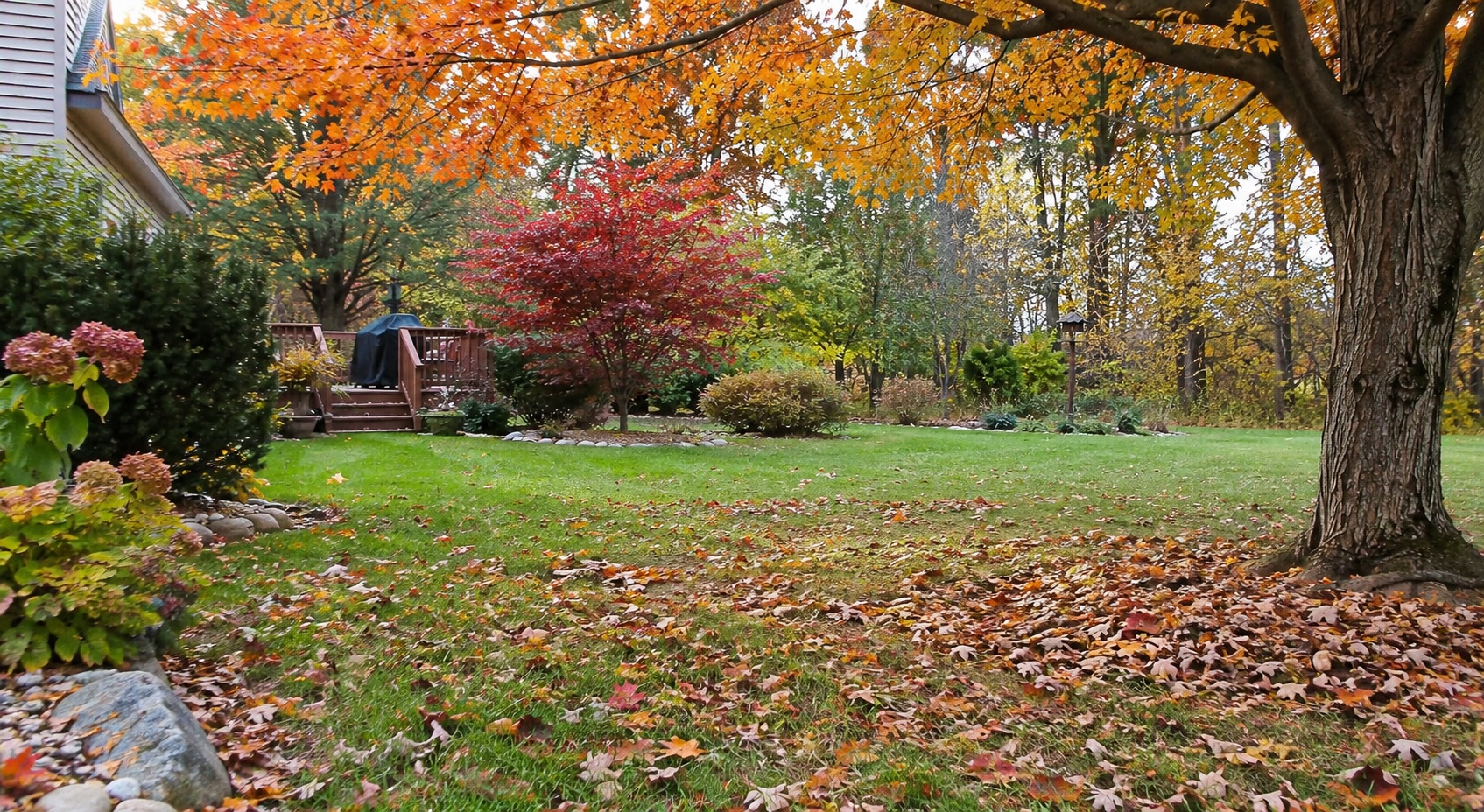
To Rake or Not to Rake? The Pros and Cons of Leaving Fall Leaves in Your Yard
As the temperatures drop and trees put on their beautiful fall display, homeowners across Virginia, Maryland, and the DC area face a familiar seasonal chore: raking leaves.
But before you grab the rake or fire up the leaf blower, have you ever wondered if you actually need to remove every leaf from your yard?
Believe it or not, those fallen leaves serve an important purpose in nature. They provide nutrients to the soil, protect plants, and offer shelter for beneficial insects and wildlife. However, allowing too many leaves to accumulate in the wrong places can create problems for your lawn and landscape.
So, should you rake or leave those leaves behind? The answer is a little bit of both!
The Benefits of Leaving Fall Leaves
While a thick blanket of leaves covering your lawn isn’t ideal, allowing some leaves to remain in the right areas can benefit your landscape.
1. Natural Nutrients for Your Soil
As leaves decompose, they break down into organic matter that helps improve soil structure and return nutrients to the soil. This natural process supports healthier soil and benefits the plants and trees growing in your landscape.
Instead of bagging every leaf, consider using a mulching mower to chop them into smaller pieces that can break down more easily.
2. Protection for Plant Roots
A light layer of leaves in garden beds can act as natural insulation, helping moderate soil temperatures and protecting plant roots from extreme temperature fluctuations throughout the winter.
Leaves also help retain soil moisture and reduce erosion.
3. A Home for Beneficial Wildlife
Fallen leaves provide important habitat for beneficial insects, pollinators, and other small creatures. Many native butterflies and moths overwinter in leaf litter as eggs, caterpillars, or pupae.
4. Less Yard Waste
Leaving appropriate amounts of leaves in your landscape means fewer bags of yard waste to collect and dispose of. It also allows nature to recycle organic material right where it falls.
When Leaving Leaves Becomes a Problem
Although leaves offer several benefits, there are situations where allowing them to accumulate can do more harm than good.
1. Thick Layers Can Damage Your Lawn
A heavy layer of wet leaves can block sunlight and restrict airflow to your grass. Over time, this can smother turf and contribute to unhealthy lawn conditions.
If you have large trees that drop significant amounts of leaves, removing or mulching them periodically is important.
2. Excess Moisture Can Encourage Lawn Problems
Wet, compacted leaves can trap moisture against the grass, creating conditions that encourage fungal lawn diseases. Keeping excessive leaf buildup off your lawn helps maintain healthier turf throughout the dormant season.
3. Leaves Around Tree Trunks Can Create Problems
Piling leaves, mulch, or other organic material directly against tree trunks can retain moisture around the bark and encourage decay. Keep the area around the base of your trees clear, and avoid creating piles that resemble mulch volcanoes.
4. Clogged Gutters and Drainage Areas
Leaves don’t just accumulate on the lawn. They can also collect in gutters, storm drains, and drainage areas. When these become clogged, water may not drain properly, potentially leading to pooling or water damage.
The Best of Both Worlds: Mulching Your Leaves
If you want to enjoy the benefits of fallen leaves without sacrificing the health of your lawn, mulching is an excellent option.
A mulching mower chops leaves into smaller pieces that can settle between grass blades and gradually decompose. This returns organic matter to the soil while reducing the thick layers that can smother grass.
Here are a few simple ways to manage fall leaves:
- Mulch leaves on your lawn: Use a mulching mower to break leaves into small pieces. Avoid leaving a thick layer that covers the grass.
- Leave some leaves in garden beds: A light layer can provide natural insulation and habitat for beneficial insects.
- Clear leaves from walkways and driveways: Wet leaves can become slippery and create safety hazards.
- Keep tree trunks clear: Avoid piling leaves or mulch against the bark.
- Clean gutters and drainage areas: Prevent blockages before winter weather arrives.
Give Your Trees Some Attention This Fall
Fall is also a great time to take a closer look at the trees on your property. As leaves drop, you may notice dead branches, damaged limbs, or structural concerns that were hidden by summer foliage.
It’s a good opportunity to evaluate your trees and address potential problems before winter storms bring snow, ice, and strong winds.
If you notice dead or hanging branches, cracks, or other concerning changes, consider having a professional arborist evaluate the tree.
Get a Quote
Looking for expert tree care? Fill out the form below and we’ll be in touch!