

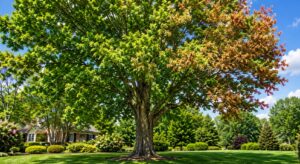
Is Your Tree Stressed? Warning Signs to Watch for This Summer
Summer is a beautiful time to enjoy your landscape, but it can also be one of the most stressful seasons for trees. High temperatures, drought conditions, insect activity, and disease pressure can all take a toll on even mature, established trees.
The challenge is that many signs of tree stress are subtle at first. By the time a tree begins dropping large branches or showing significant decline, the damage may already be extensive.
Knowing what to look for can help you identify problems early and protect the health, safety, and beauty of your property.
1. Leaves Are Wilting, Curling, or Turning Brown
One of the first signs of stress is often found in the leaves. During periods of extreme heat or drought, leaves may begin to wilt, curl at the edges, or develop brown, scorched areas.
While some leaf discoloration can be normal, widespread browning or curling throughout the canopy may indicate that the tree is struggling to access enough water.
Pay particular attention to younger trees, which are more vulnerable to drought stress than established specimens.
2. Premature Leaf Drop
Trees naturally shed leaves in the fall, but dropping leaves in the middle of summer is often a warning sign.
When a tree is under stress, it may shed part of its canopy to conserve resources. This survival mechanism helps reduce water loss but signals that the tree is experiencing problems.
If you notice excessive leaves accumulating beneath your tree in June, July, or August, it may be time for a professional evaluation.
3. Dead or Dying Branches
Dead branches can appear anywhere in the canopy, but they are especially concerning when found in larger limbs.
Look for:
- Branches with no leaves while surrounding branches are healthy
- Peeling bark
- Brittle wood that snaps easily
- Branches that appear gray or lifeless
Deadwood not only indicates tree stress but can also become a safety hazard, especially during summer thunderstorms and high winds.
4. Cracks in the Trunk or Major Limbs
Trees naturally develop some bark irregularities as they age, but fresh cracks in the trunk or major branches should never be ignored.
Cracks may result from:
- Storm damage
- Heat stress
- Structural weakness
- Internal decay
These defects can compromise the stability of the tree and increase the likelihood of branch or tree failure.
5. Fungal Growth Around the Base
Mushrooms or fungal growth near the base of a tree can indicate decay occurring below the surface.
While not all fungi are harmful, some species signal that roots or internal wood are breaking down. Since root health directly affects tree stability, fungal growth around the trunk should be inspected by an arborist.
A healthy-looking canopy does not always mean a healthy root system.
6. Increased Insect Activity
Many insects are attracted to stressed trees because weakened trees have fewer natural defenses.
Watch for:
- Holes in leaves
- Sawdust-like material on the ground
- Bark peeling away
- Increased woodpecker activity
- Visible insects on trunks or branches
While insects may not always be the primary cause of stress, they often take advantage of trees that are already struggling.
How to Help a Stressed Tree
If you notice one or more of these warning signs, there are several steps you can take:
Water Properly
Deep, slow watering is more effective than frequent shallow watering. Mature trees benefit from thorough soaking that reaches the root zone.
Apply Mulch Correctly
A 2- to 4-inch layer of mulch helps conserve moisture and regulate soil temperature. Be careful not to pile mulch against the trunk, which can lead to decay.
Avoid Root Damage
Construction, excavation, and excessive foot traffic can damage roots and increase stress.
Schedule Regular Inspections
Professional inspections help identify issues before they become serious health or safety concerns.
When to Call an Arborist
Trees often show signs of distress long before they become hazardous. Early diagnosis can mean the difference between saving a valuable landscape tree and needing costly removal.
If your tree is dropping leaves, showing dieback, developing cracks, or simply doesn’t look as healthy as it once did, a professional assessment can identify the cause and recommend treatment options.
At Titan Tree Care, our ISA Certified Arborists help homeowners throughout Virginia, Maryland, and the Washington, DC area diagnose tree health issues and develop customized care plans. Whether your tree needs pruning, disease management, fertilization, or a comprehensive health evaluation, we’re here to help keep your landscape thriving all summer long.
Concerned about a tree on your property?
Contact Titan Tree Care today to schedule a professional tree health assessment and keep your trees healthy, safe, and beautiful for years to come.
Get a Quote
Looking for expert tree care? Fill out the form below and we’ll be in touch!