

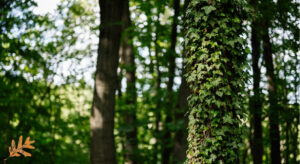
English Ivy: Why It’s Harmful and What to Plant Instead
English ivy (Hedera helix) is a common evergreen vine found throughout Maryland, Virginia, and the Washington DC metro area. While it is often used as a ground cover or ornamental climbing plant, it is classified as an invasive species that can cause serious harm to trees, landscapes, and native ecosystems.
English ivy spreads aggressively across the ground and climbs vertical surfaces, including trees and buildings. It forms dense mats that outcompete native plants, reduce biodiversity, and create ideal conditions for pests. Once established, it is difficult to control without ongoing maintenance.
How English Ivy Damages Trees
When ivy climbs trees, it interferes with their natural growth and stability. It blocks sunlight from reaching leaves, reducing the tree’s ability to produce energy. The added weight of ivy increases the risk of limb breakage and tree failure during storms. Ivy also traps moisture against the bark, promoting decay and insect infestations.
In addition to English ivy, other invasive vines commonly found in the region include wintercreeper (Euonymus fortunei), Japanese honeysuckle (Lonicera japonica), periwinkle (Vinca minor), and porcelain berry (Ampelopsis brevipedunculata). These plants spread rapidly and disrupt native ecosystems.
How to Remove English Ivy
To control English ivy, start by cutting vines at the base of trees to stop nutrient flow. Avoid pulling ivy directly off the tree canopy, as this can damage bark. Instead, allow the upper portions to die naturally. Remove ground ivy by pulling roots or using repeated cutting methods. Long-term monitoring is essential to prevent regrowth.
Large ivy infestations can pose safety risks and may require professional removal. Certified arborists can assess tree health, safely remove invasive vines, and recommend long-term solutions for maintaining a healthy landscape.
Best Native Ground Cover Alternatives
If you are looking for alternatives to ivy you can choose native ground covers that support local ecosystems. Golden ragwort (Packera aurea) provides bright spring flowers and excellent erosion control. Wild ginger (Asarum canadense) thrives in shade with attractive foliage. Foamflower (Tiarella cordifolia) offers delicate blooms, while green and gold (Chrysogonum virginianum) provides low-growing coverage with seasonal color.
In conclusion, English ivy may appear attractive, but it is a destructive plant in the Mid-Atlantic region. Managing and removing ivy helps protect trees, preserve native habitats, and improve overall landscape health. If you need help, reach out our to our ISA certified arborist!
Get a Quote
Looking for expert tree care? Fill out the form below and we’ll be in touch!