

Plant Garlic This Fall: A Little Clove, a Lot of Flavor!
Love fresh garlic? Fall is the perfect time to get your hands dirty!
There’s something satisfying about planting a tiny clove in the fall and harvesting a whole head of garlic the following summer. And the best part? Garlic is surprisingly easy to grow, even if you’re not a seasoned gardener.
For homeowners throughout Maryland, fall is an excellent time to plant garlic. The cloves have time to develop roots before winter arrives, then get a head start when spring temperatures return. With a little planning, you can enjoy homegrown garlic in your favorite recipes next summer!
Ready to grow your own garlic? Grab your gardening gloves, find a sunny spot, and let’s dig in.
Why Plant Garlic in the Fall?
Garlic benefits from a period of cool weather. Planting in autumn gives the cloves time to establish roots before the ground freezes. Once spring arrives, the plants can put that root system to work producing healthy green shoots and developing bulbs.
Fall planting also works well with Maryland’s climate, where winters are generally cold enough to provide garlic with the seasonal chill it needs.
The sweet spot: Aim to plant garlic about four to six weeks before the ground typically freezes in your area. In much of Maryland, that means October through November, although elevation and local weather can shift the ideal window. As we are late October, it’s a great time to get started!
Step-by-Step: How to Plant Garlic
Step 1: Choose the Right Garlic
Not all garlic is created equal!
There are two main types to consider:
- Hardneck garlic: A great choice for Maryland gardeners. It generally performs well in colder climates, produces a central flowering stalk called a scape, and offers rich, complex flavors.
- Softneck garlic: Often stores longer and is commonly found in grocery stores. It can work in Maryland gardens, especially in milder locations and with varieties suited to your growing conditions.
For the best results, purchase seed garlic from a reputable garden center or garlic grower. Grocery-store garlic may be treated to discourage sprouting and may not be well suited to your local climate.
Step 2: Find a Sunny Spot
Garlic loves sunshine! Choose a location that receives at least six hours of direct sunlight each day.
Good drainage is equally important. Garlic bulbs can rot in soggy soil, so avoid low spots where water tends to collect.
If your garden soil is heavy clay, consider a raised bed or improve the soil structure with finished compost. The goal is soil that holds enough moisture to support growth but drains well after rain.
Step 3: Prepare the Soil
Healthy soil is the foundation of a healthy garden.
Loosen the soil about 8–12 inches deep and mix in a moderate amount of finished compost. Garlic grows best in fertile, well-drained soil, generally with a pH around 6.0–7.0.
Avoid adding fresh manure, which can introduce excess nutrients or pathogens and may harm developing plants.
A quick soil test can help you determine whether your garden needs any additional nutrients or pH adjustments. More fertilizer isn’t always better!
Step 4: Separate the Cloves
Just before planting, gently separate the garlic bulb into individual cloves.
Keep the papery skin intact, and select the largest, healthiest cloves for planting. Save any small or damaged cloves for cooking.
Important: Plant individual cloves, not the entire bulb. Each healthy clove has the potential to develop into a new garlic bulb.
Step 5: Plant Your Garlic
Now for the fun part!
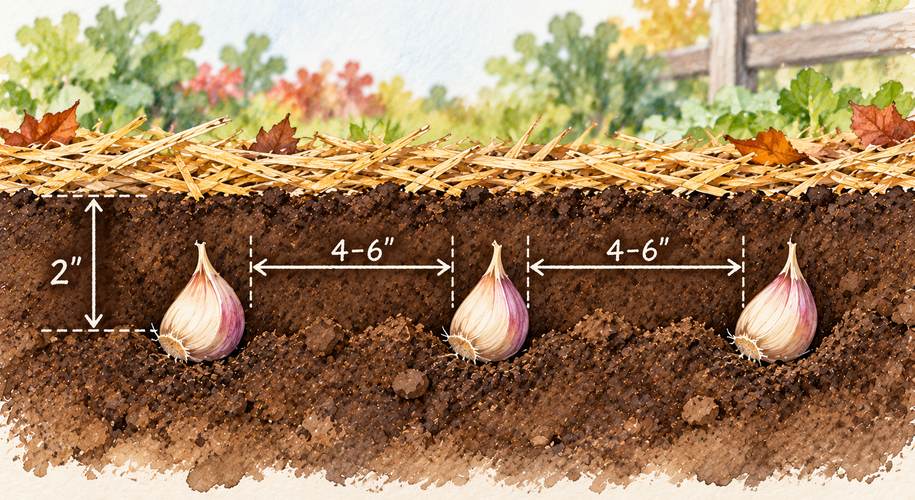
- Make holes or furrows about 2 inches deep.
- Place each clove with its pointed end facing up and its flat root end facing down.
- Space cloves approximately 4–6 inches apart.
- Leave about 8–12 inches between rows.
- Cover with soil and gently firm the surface.
Water the bed after planting if the soil is dry. You want the soil moist, not waterlogged.
Step 6: Add a Cozy Winter Blanket
Garlic may be tough, but a little winter protection helps.
Spread approximately 3–4 inches of clean straw or shredded leaves over the bed after planting. This layer helps moderate soil temperatures, conserve moisture, and reduce weed growth.
As the weather warms in spring, check the mulch. If shoots struggle to emerge through a thick layer, gently pull some mulch back.
Step 7: Water and Wait
Garlic is relatively low-maintenance, but it still needs attention.
- Fall and winter: Water as needed if conditions are unusually dry, but don’t keep the soil soggy.
- Spring: Resume regular watering when growth picks up, especially during dry spells.
- Weeding: Remove competing weeds before they crowd out your garlic.
Hardneck garlic may produce curly green flower stalks called scapes in late spring or early summer. Snipping them off once they curl can help redirect the plant’s energy toward bulb development. And don’t toss them! Garlic scapes are delicious in pesto, stir-fries, and scrambled eggs.
When Can You Harvest Your Garlic?
Patience pays off! Garlic planted in fall is typically ready for harvest in Maryland in early to midsummer, often around June or July, depending on the variety and weather.
Look for lower leaves turning brown while several upper leaves remain green. Don’t wait until every leaf has died back, or the bulb wrappers may begin to deteriorate.
Carefully loosen the soil with a garden fork and lift the bulbs rather than pulling aggressively on the stems.
Brush off excess soil, but don’t wash the bulbs. Cure them in a dry, shaded, well-ventilated area for about two to four weeks. Once fully cured, trim the roots and stems as appropriate for your garlic type and store the bulbs in a cool, dry, well-ventilated location.
A Final Tip: Don’t Forget the Rest of Your Landscape!
Fall is a wonderful season to prepare your garden and landscape for the months ahead. While you’re planting garlic, it’s also a good time to inspect your trees and shrubs, remove fallen branches, and think about protecting your landscape before winter weather arrives.
Remember that trees, shrubs, and garden plants all benefit from the right growing conditions. Healthy soil, appropriate watering, and proper seasonal care can make a real difference in how your landscape performs year after year.
At Titan Tree Care, we help homeowners throughout the Maryland, Virginia, and Washington, D.C., area care for their trees and landscapes with professional tree care and plant health services.
Here’s to a little fall planting and a whole lot of flavor next summer!
For help keeping your trees healthy and your landscape thriving, visit TitanTreeCare.org.
Gardening accuracy note: The University of Maryland Extension recommends different planting windows across the state: late September in Western Maryland through early November on the Eastern Shore and in Southern Maryland. For central Maryland, mid-to-late October is a good general target. Their guide also recommends planting cloves with 1–2 inches of soil covering them and using disease-free seed garlic rather than grocery-store garlic.
Get a Quote
Looking for expert tree care? Fill out the form below and we’ll be in touch!