

Why Is My Tree Losing Leaves in Summer?
Summer is a season of growth, but it can also be one of the most stressful times of year for your trees. Extended periods of high temperatures, limited rainfall, and dry soil can take a toll on even established, healthy trees.
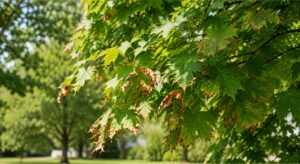
One of the first things homeowners may notice is leaves curling, browning, wilting, or dropping earlier than expected.
While some summer leaf loss can be normal, significant or sudden leaf drop can be a sign that your tree is under stress. Trees naturally shed older or damaged leaves throughout the growing season. However, if you notice large amounts of foliage turning brown or dropping at once, particularly when the rest of your landscape appears healthy, it’s worth taking a closer look.
Premature leaf loss can be the tree’s way of conserving water during periods of environmental stress. But heat and drought aren’t the only possible causes. Insects, disease, root damage, and other problems can produce similar symptoms.
How Heat & Drought Stress Affect Trees
Trees rely on water to transport nutrients, maintain healthy leaves, and carry out photosynthesis. During prolonged periods of heat and dry weather, the soil can lose moisture faster than the tree’s roots can replace it.
When water becomes limited, a tree may begin to protect itself by reducing the amount of water it sends to its leaves. This can result in:
- Wilting or curling leaves
- Brown or crispy leaf edges
- Yellowing foliage
- Premature leaf drop
- Reduced new growth
- A thinner-than-normal canopy
Young trees and newly planted trees can be particularly vulnerable because their root systems have not yet become fully established.
However, mature trees can also experience significant stress during prolonged periods of heat and drought.
Other Reasons Your Tree May Be Losing Leaves
Heat and drought are common causes of summer leaf loss, but they’re not the only possibilities. If your tree is declining, it’s important to consider the bigger picture.
Insects: Certain insects feed on leaves, branches, or the tree’s vascular system. Depending on the pest, you may notice holes, discoloration, premature leaf drop, or dieback.
Disease: Fungal and other diseases can cause spotting, discoloration, wilting, and premature leaf loss. Some diseases become more noticeable during warm, humid weather.
Root damage: Construction, excavation, soil compaction, or damage from vehicles can affect the roots responsible for absorbing water and nutrients.
Poor soil conditions: Compacted or poorly drained soil can interfere with healthy root development and water uptake.
Previous environmental stress: A tree that experienced stress during a previous season may show symptoms later. Tree health problems don’t always appear immediately after the initial damage occurs.
Signs Your Tree May Be Under Stress
Take a closer look at your trees if you notice several of these symptoms:
- Leaves wilting despite recent rainfall
- Brown or scorched-looking leaf margins
- Premature or excessive leaf drop
- Sparse foliage
- Dead branches or branch tips
- Unusual leaf spots or discoloration
- Cracked or damaged bark
- New growth dying back
- Mushrooms or fungal growth near the base of the tree
- Visible insect activity
A single symptom doesn’t necessarily mean there’s a serious problem. But multiple symptoms occurring together may indicate that your tree needs further evaluation.
What Can Homeowners Do?
During periods of hot, dry weather, one of the most important things homeowners can do is pay attention to soil moisture and provide appropriate supplemental water when necessary.
When watering established trees, slow and deep watering is generally more beneficial than frequent, shallow watering. Newly planted trees typically require more consistent attention because their root systems are still developing.
Proper mulch can also help conserve soil moisture and moderate soil temperatures. However, avoid piling mulch against the trunk. The familiar “mulch volcano” can create conditions that contribute to moisture-related problems, decay, and other issues around the trunk.
It’s also important to avoid assuming that a stressed tree simply needs fertilizer. Applying fertilizer without knowing what is causing the problem may not address the underlying issue and can sometimes create additional stress.
Don’t Assume Summer Leaf Drop Means Your Tree Is Dying
One of the biggest mistakes homeowners can make is assuming that brown leaves or premature leaf drop automatically means a tree needs to be removed. Trees are remarkably resilient, and many can recover from periods of environmental stress with proper care. The important thing is determining why the tree is struggling.
If symptoms continue, become more severe, or appear alongside dead branches, structural problems, significant insect activity, or other concerning changes, an evaluation by a qualified arborist can help determine what is happening.
Keep an Eye on Your Trees This Summer
Your trees can’t tell you when something is wrong, but they often give you clues. Changes in foliage, growth, bark, and branches can all provide valuable information about a tree’s health.
If your trees are showing signs of summer stress and you’re not sure what’s causing the problem, Titan Tree Care can help. Our team can evaluate your trees, identify potential health or structural concerns, and recommend appropriate care to help keep your landscape healthy.
Get a Quote
Looking for expert tree care? Fill out the form below and we’ll be in touch!