

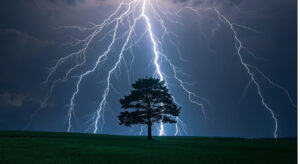
Can a Tree Survive a Lightning Strike? The Shocking Truth About Nature’s Tallest Lightning Rods
Every summer, powerful thunderstorms roll across Virginia, Maryland, and the Washington, DC metro area, bringing heavy rain, gusty winds, and one of nature’s most incredible displays—lightning.
If you’ve ever heard an explosive crack during a storm and later discovered a tree with bark peeled away or a long scar running down its trunk, you may have witnessed the aftermath of a lightning strike.
Which may lead you to ask: Can a tree actually survive being struck by lightning?
The answer is yes, but not always. Much depends on the species, the health of the tree, the path the lightning takes, and how quickly the tree receives professional care afterward.
Why Are Trees So Often Struck by Lightning?
Lightning naturally seeks the quickest route to the ground. Since trees are often the tallest objects in the landscape, they become prime targets.
While lightning can strike almost anywhere, trees that are
- Standing alone in a yard or field
- Growing on hilltops or ridges
- Taller than surrounding trees
- Located near water
are especially vulnerable.
What Happens When Lightning Hits a Tree?
If you remember from science class, a single lightning bolt can carry hundreds of millions of volts of electricity and heat the surrounding air to temperatures hotter than the surface of the sun for an instant. Inside a tree, that electricity rapidly superheats the water beneath the bark.
The result? Steam. Lots of it.
Because steam expands so quickly, it often causes the bark to literally explode off the tree. This is why homeowners sometimes find long strips of bark scattered across their yard after a storm.
The lightning may also:
- Split the trunk
- Crack major limbs
- Destroy internal wood fibers
- Damage roots underground
- Ignite small fires inside hollow sections
- Permanently weaken the tree’s structure
Signs Your Tree Was Struck by Lightning
Not every lightning strike leaves obvious damage immediately. Watch for these common symptoms:
- Long vertical cracks running down the trunk
- Bark that has been stripped away
- Branches that suddenly die
- Leaves that wilt or turn brown within days
- Sawdust-like material at the base of the tree
- Splintered wood
- A tree that suddenly leans after a storm
Can a Tree Really Survive?
Many trees do survive lightning strikes. Trees are incredibly resilient. If the lightning travels mostly down the outside of the trunk or causes only limited internal damage, the tree may recover over several years.
Recovery depends on several factors:
1. The Tree’s Overall Health
Healthy trees have a much better chance of sealing wounds and replacing damaged tissue than trees already stressed by drought, insects, or disease.
2. The Species
Some trees tolerate lightning damage better than others. Species commonly found in the DC region that may recover include:
- White Oak
- Red Oak
- Tulip Poplar
- American Sycamore
- American Beech
No species is “lightning-proof,” but vigorous, healthy trees often fare better than weak or declining ones.
3. The Severity of the Strike
A glancing strike may only damage bark. A direct strike through the center of the trunk can destroy the tree’s vascular system, making recovery much less likely.
Sometimes the Damage Is Hidden
One of the biggest misconceptions is that if a tree is still standing after a storm, it’s safe. Unfortunately, that’s not always true. Lightning can weaken the root system, major branch attachments and internal support tissues. A tree that looks fine right after a store may become hazardous months later. That’s why professional inspection is so important after a suspected strike.
What Should You Do After a Lightning Strike?
If you believe a tree has been struck:
- Stay away from damaged limbs that could fall unexpectedly.
- Never attempt to climb or prune the tree yourself.
- Contact a certified arborist for a professional inspection.
The sooner a tree is evaluated, the better the chances of preserving it or preventing a dangerous failure.
Don’t wait until hidden damage becomes a dangerous problem. If your property has experienced a recent thunderstorm, let Titan Tree Care inspect your trees and recommend the best course of action.
Get a Quote
Looking for expert tree care? Fill out the form below and we’ll be in touch!